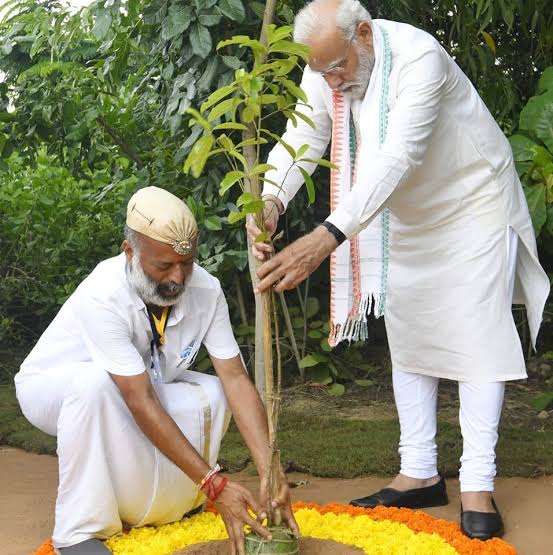
🌱 The Man Rebuilding India’s Forests: How R. K. Nair Is Creating Dense Urban Jungles Across India
⚡ Quick Summary
- R. K. Nair is an Indian environmentalist restoring forests using the Miyawaki Method
- Started after witnessing tree destruction in Gujarat
- Created 100+ dense forests across India
- Planted 30,000+ trees on degraded land
- Focuses on fast-growing, self-sustaining ecosystems
👉 India can restore forests faster — with the right system.
🌏 Why India Needs Forest Restoration Now
India isn’t just facing pollution.
👉 It’s facing a nature loss crisis.
- Rapid urbanization
- Declining tree cover
- Loss of biodiversity
- Rising heat in cities
From metros to tier-2 cities, green spaces are disappearing.
👉 This impacts:
- Air quality
- Climate resilience
- Urban livability
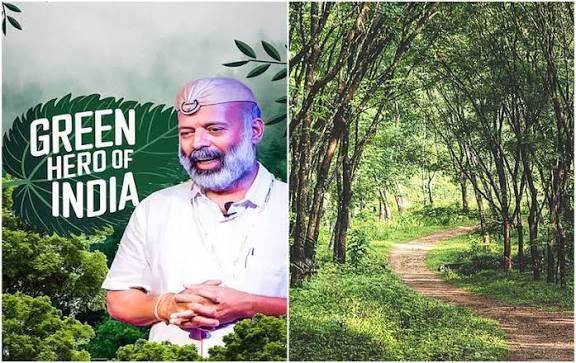
🐦 The Moment That Sparked a Movement
In 2012, during a road construction project in Gujarat:
- Hundreds of trees were cut
- A bird’s nest fell
- Eggs shattered
For most, it was just another development project.
For R. K. Nair, it became a turning point.
“If we are taking nature away… why aren’t we giving it back?”
🌳 From One Acre to a National Movement
- Bought 1 acre of land
- Planted ~1,500 trees
- Used the Miyawaki Method
This wasn’t just plantation.
👉 It was ecosystem restoration.
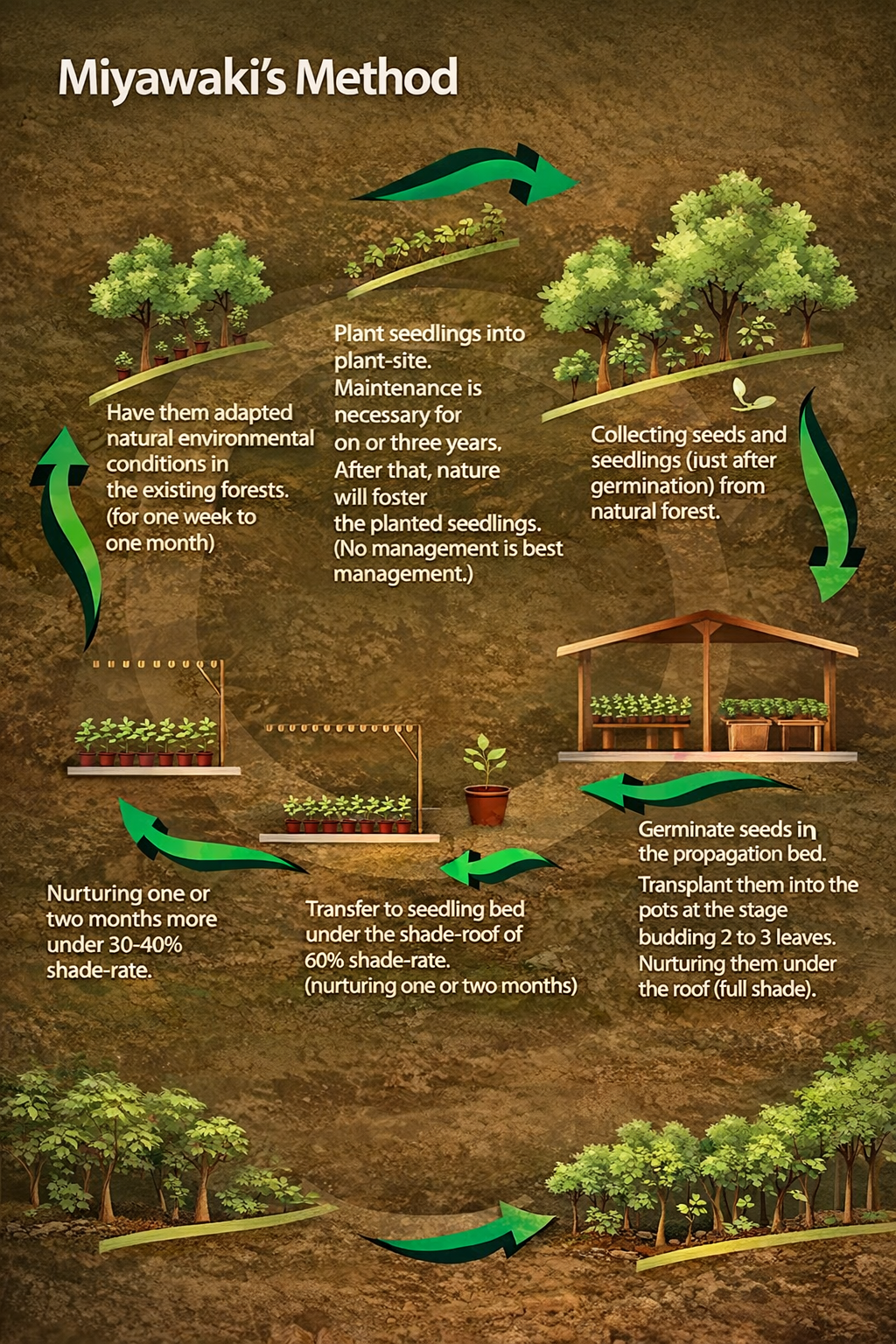
⚡ What Is the Miyawaki Method?
The Miyawaki Method is a Japanese technique for creating dense forests quickly.
✔ How it works:
- Native species planted close together
- Plants compete for sunlight
- Growth accelerates naturally
🚀 Result:
- Forests grow up to 10x faster
- 100–300 years → ~20–30 years
- High biodiversity
- Self-sustaining ecosystems
👉 Ideal for Indian cities with limited land.
🚀 Scaling Forests Across India
- Built 100+ forests across India
- Planted 30,000+ trees
- Converted dumping grounds into green zones
- Worked with governments, industries, and communities
👉 Transforming:
- Urban spaces
- Industrial land
- Public areas
🌍 More Than Trees — A System Shift
This is not just about planting trees.
👉 It’s about changing systems.
- Pollution is not just industrial
- It is behavioral and systemic
Real solution:
- Localized action
- Scalable systems
- Long-term thinking
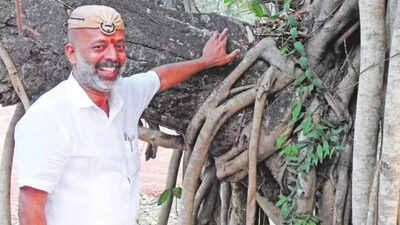
🕊️ Forests with Meaning
A forest was created in memory of the Pulwama martyrs.
Thousands of trees were planted as a tribute.
👉 Forests are not just ecological assets — they are emotional ecosystems.
🧠 The Bigger Lesson for India
We often wait for:
- Government action
- Corporate responsibility
- Policy change
👉 But one person can start a movement.
🌱 What This Means for You
You don’t need to plant a forest.
- Step 1: Plant native trees locally
- Step 2: Support green initiatives
- Step 3: Reduce environmental impact
👉 Small steps → large impact
⚠️ Common Mistakes
- Thinking impact requires scale
- Ignoring local ecosystems
- Choosing convenience over responsibility
👉 Sustainability = consistency + systems
🌿 Perspective
Sustainability is not just:
❌ Buying eco-friendly products
It is:
✅ Creating systems that make better choices easier
👉 People need trusted systems to act sustainably.
🚀 Final Thought
India doesn’t just need more products.
👉 It needs more purpose-driven action.
Change begins with:
- One moment
- One decision
- One step
👉 You’re already part of the shift 🌍
🔎 FAQs
Who is R. K. Nair?
An Indian environmentalist known for creating dense forests using the Miyawaki method.
What is the Miyawaki method?
A technique of planting native trees densely to create fast-growing forests.
Why is forest restoration important in India?
It improves air quality, biodiversity, and climate resilience.
Can individuals contribute?
Yes, by planting trees and supporting sustainability initiatives.
Source: https://www.thehindu.com/news/cities/Mangalore/nature-doesnt-need-social-media-posts-on-environment-day-r-k-nair/article69645185.ece/amp